
Best Pizza Dough Recipe
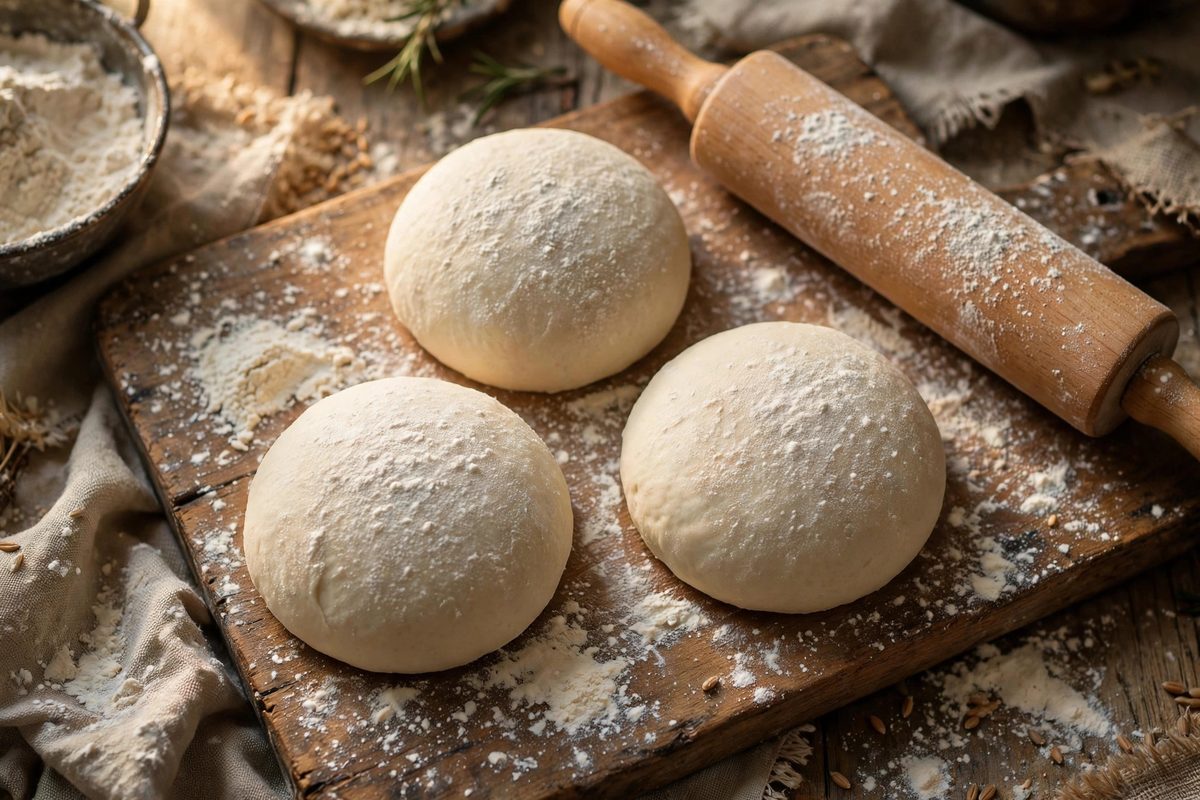
This post may contain affiliate links. If you purchase through these links, we may earn a small commission at no extra cost to you.
Chewy, blistered homemade pizza dough with real pizzeria flavor — five ingredients, one bowl, no special equipment.
Friday pizza night at our house used to mean delivery, until we did the math on what two large pizzas cost and how long they took to arrive lukewarm. This dough changed the routine: mixed in one bowl in the time it takes the oven to preheat, risen while everyone argues about toppings, and baked blistered and chewy in about 12 minutes. It is not a project. It is just dinner, better.
The decision that makes this version work is bread flour plus a full, unhurried rise. Bread flour’s higher protein builds the gluten network that gives you chew instead of softness — all-purpose works, but the crust won’t have that pull. And the rise matters more than people think: 90 minutes at room temperature minimum, or better yet 24 hours in the fridge. That slow ferment is where the flavor comes from — the difference between dough that tastes like bread and dough that tastes like pizza.
During testing, the detail that mattered most was oven heat. Home ovens don’t reach pizzeria temperatures, so we compensate: preheat at your oven’s maximum (500 to 550°F for most) for a full 45 to 60 minutes with a pizza stone or steel inside if you have one. A screaming-hot surface is what gives you the puffed, leopard-spotted crust instead of a pale, bready one. This recipe makes two 12-inch pizzas — enough for a family, or one for dinner and one for the freezer.
Why You’ll Love This Recipe
- Quick: 20 minutes of hands-on time; the rise is unattended.
- Easy method: One bowl, mixed by hand — no stand mixer required.
- Texture: Chewy interior, crisp blistered crust, real pull when you tear a slice.
- Flexible: Use tonight, refrigerate up to 3 days, or freeze for later.
- Practical: Costs a fraction of delivery and beats it on freshness every time.
Ingredients
- 3½ cups bread flour (about 440g): The higher protein is what builds chew. All-purpose works in a pinch but gives a softer crust.
- 1¼ cups warm water (110°F): Warm to the touch, like bathwater. Hot water kills yeast; cold water slows the rise to a crawl.
- 2¼ teaspoons instant yeast (1 packet): Instant mixes straight in — no proofing needed.
- 2 tablespoons extra-virgin olive oil, plus more for the bowl: Adds flavor and tenderness to the crust; oil for the bowl keeps the dough from sticking during the rise.
- 2 teaspoons granulated sugar: Feeds the yeast and helps the crust brown.
- 1½ teaspoons fine sea salt: Non-negotiable for flavor. Added with the flour so it doesn’t touch the yeast directly at first.
Substitutions: All-purpose flour works 1:1 with a slightly softer result. Active dry yeast can replace instant — proof it in the warm water with the sugar for 5 to 10 minutes first. We have not tested gluten-free flour here; the gluten network is the whole point of this dough.
How to Make Pizza Dough
- Mix. In a large bowl, whisk the flour, instant yeast, sugar, and salt. Add the warm water and olive oil and stir until a shaggy dough forms with no dry pockets.
- Knead. Turn onto a lightly floured surface and knead 8 to 10 minutes until smooth and elastic — it should spring back slowly when poked. Resist adding much extra flour; a slightly tacky dough bakes up better than a dry one. This is the most common failure point: under-kneaded dough bakes dense because the gluten never developed.
- Rise. Place in a lightly oiled bowl, turn to coat, cover, and rise in a warm spot 1 to 1½ hours until doubled. For the best flavor: after kneading, refrigerate the covered dough 24 to 72 hours (cold ferment), then let it sit at room temperature for 1 hour before shaping.
- Divide and rest. Punch down gently and divide into 2 equal pieces. Shape each into a ball, cover, and rest 15 minutes — this relaxes the gluten so the dough stretches instead of snapping back.
- Shape. On a floured surface (or floured parchment), press and stretch each ball into a 12-inch round, leaving a slightly thicker rim for the crust. Work from the center outward; never use a rolling pin — it crushes the air bubbles you spent hours building.
- Top lightly and bake. Preheat your oven to its maximum (500 to 550°F) for 45 to 60 minutes with a stone or steel inside if you have one. Transfer the shaped dough to a floured peel or parchment, add sauce and toppings sparingly (overloading is the second most common failure — it steams the center), and bake 10 to 14 minutes until the crust is puffed, blistered, and deep golden.
- Cool briefly. Let the pizza rest 2 to 3 minutes before slicing so the cheese sets and the slice holds.
Tips for Success
- Weigh the flour if you can: 440 grams is exact; cup measurements of flour can vary by 20 percent, which is the difference between tacky and dry.
- Preheat longer than feels necessary: A full 45 to 60 minutes at max heat. The oven thermometer saying “ready” and the stone actually being hot are two different things.
- Keep toppings light: A few tablespoons of sauce, a modest layer of cheese. Heavy toppings trap steam and give you a soggy center every time.
- Wet hands, not more flour: If the dough sticks while shaping, dampen your hands instead of flouring the dough — extra flour toughens the crust.
- Parchment is your friend: Build the pizza on parchment and slide the whole thing onto the stone. No peel, no drama.
Variations
- Whole wheat blend: Replace 1 cup of the bread flour with whole wheat flour for a nuttier, heartier crust (add 2 extra tablespoons of water).
- Thin and crispy: Divide the dough into 3 pieces instead of 2 and stretch each very thin; bake 8 to 10 minutes.
- Garlic knot bites: Cut leftover dough scraps into strips, tie in knots, brush with garlic butter, and bake at 450°F for 12 minutes.
- Herb crust: Knead 1 tablespoon of dried Italian seasoning into the dough with the flour.
Storage & Freezing
Refrigerate risen dough balls in oiled, covered containers for up to 3 days — the flavor keeps improving. To freeze, coat dough balls lightly in olive oil, wrap individually, and freeze up to 3 months; thaw overnight in the fridge, then rest 1 hour at room temperature before shaping. Baked pizza keeps 3 days refrigerated; reheat on a hot skillet or in a 450°F oven for the crispest crust.
Frequently Asked Questions
Can I use all-purpose flour instead of bread flour?
Yes — the dough will still work, but the crust will be softer and less chewy because all-purpose has less protein. If chew is what you are after, bread flour is worth buying for this one recipe.
Why didn’t my dough rise?
Usually dead yeast or water that was too hot. Check the yeast’s expiration date, and keep the water at 110°F — comfortably warm, not hot. A cold kitchen also slows things down; try the oven with just the light on as a warm spot.
What is a cold ferment, and is it worth it?
It means letting the dough rise slowly in the fridge for 24 to 72 hours instead of 90 minutes at room temp. Yes, it is worth it — the slow ferment develops noticeably deeper, more complex flavor. It is the single biggest upgrade you can make to homemade pizza.
My dough keeps snapping back when I stretch it. Help?
The gluten is tense. Cover the dough and walk away for 15 minutes — the rest lets the gluten relax, and it will stretch easily afterward. Fighting it just makes it tougher.
Best Pizza Dough Recipe
Chewy, blistered homemade pizza dough with real pizzeria flavor — five ingredients, one bowl, no mixer needed.
Prep Time: 20 minutes | Rise Time: 1 hour 30 minutes | Total Time: 1 hour 50 minutes | Servings: 2 (12-inch) pizzas
Ingredients
- 3½ cups bread flour (about 440g)
- 1¼ cups warm water (110°F)
- 2¼ teaspoons instant yeast (1 packet)
- 2 tablespoons extra-virgin olive oil, plus more for the bowl
- 2 teaspoons granulated sugar
- 1½ teaspoons fine sea salt
Instructions
- Whisk flour, yeast, sugar, and salt; add warm water and olive oil and stir into a shaggy dough.
- Knead 8 to 10 minutes until smooth and elastic.
- Place in an oiled bowl, cover, and rise 1 to 1½ hours until doubled (or cold-ferment 24 to 72 hours in the fridge).
- Divide into 2 balls; cover and rest 15 minutes.
- Stretch each into a 12-inch round with a thicker rim; do not use a rolling pin.
- Bake on a preheated stone/steel at your oven’s maximum (500 to 550°F) for 10 to 14 minutes with light toppings, until puffed and deep golden.
- Rest 2 to 3 minutes before slicing.
Notes: Preheat the oven a full 45 to 60 minutes — the stone must be screaming hot. Keep toppings light to avoid a soggy center.
You May Also Like
- Best Lasagna Recipe – Another Italian-night centerpiece for when you want comfort without the wait.
- Best Mac and Cheese Recipe – The other cheesy crowd-pleaser every family needs in rotation.
- Best Pasta Salad Recipes – Serve it alongside pizza night for a complete spread.